
Some links in this article are affiliate links. If you buy through them, I may earn a commission at no extra cost to you. Disclosure.
In 2026 alone, nearly half the global workforce operates independently in some form, and Upwork's own data shows freelancers added $1.77 trillion to the US economy alone.
Demand for skilled independent workers genuinely outpaces supply right now. But almost every beginner gets stuck on the exact same wrong question: "How do I get a client if I have zero experience?"
The honest answer changes everything about where you should actually spend your first two weeks.
The Biggest Myth About Landing Your First Client
Nielsen's research found that 92% of consumers trust recommendations from people they know over any other form of advertising. Your first client trusts you because someone vouched for you; not because your brand-new platform profile has reviews, because it doesn't have any yet.
Start with your phone contacts, not a marketplace search bar.
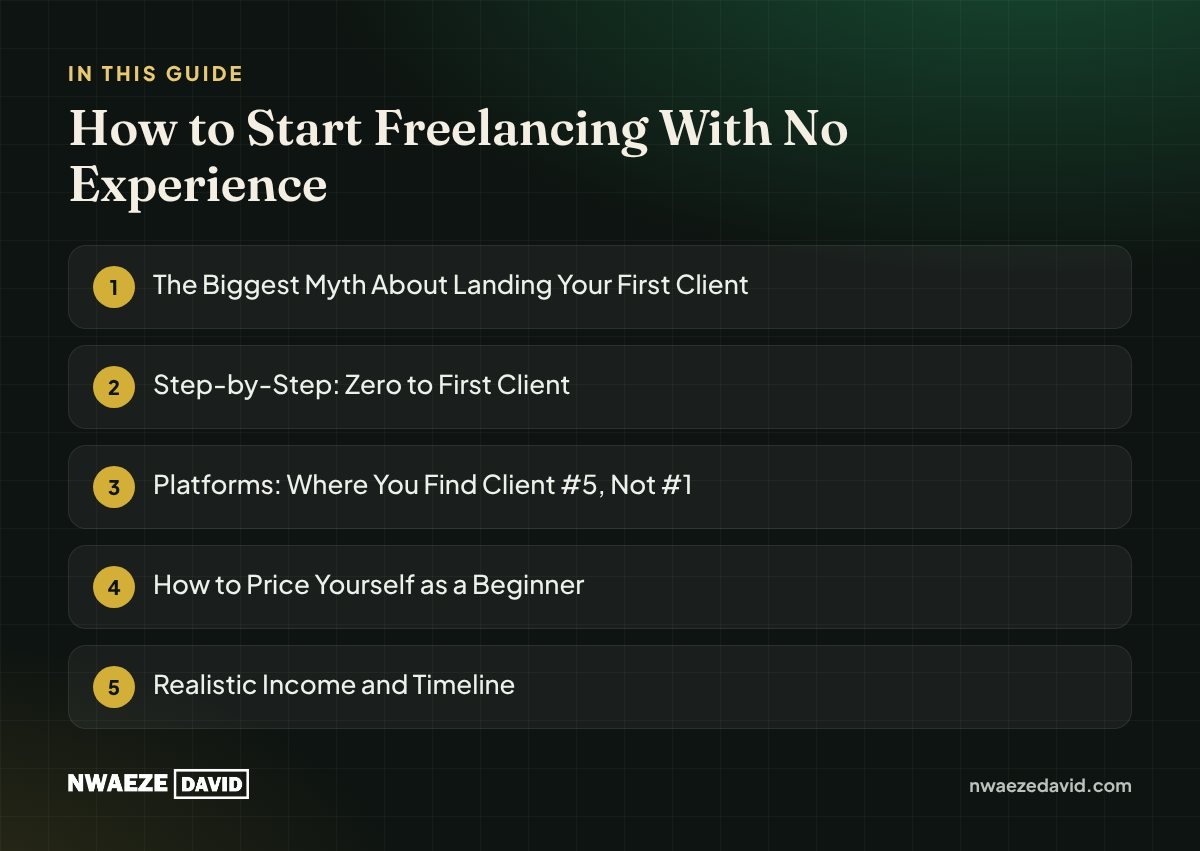
Step-by-Step: Zero to First Client
1 Pick One Skill (Not Five)
List every skill you have, including self-taught and academic ones. Filter for what the market actually pays for and what you can deliver at a solid quality level right now. The intersection is your starting niche, and it should be one specific thing, not a vague list of services.
2 Create 3–5 Spec Samples
No experience doesn't mean no portfolio. Find a poorly designed website and redesign it. Find a weak piece of content and rewrite it better. Show the before-and-after.
This demonstrates real skill and judgement, exactly what a potential client is actually evaluating, whether you've been paid before or not.
3 Build a Simple Portfolio (Not a Custom Website)
A Notion page, a Carrd site, or even a well-formatted PDF is genuinely enough for your first ten clients. Include your 3-5 samples, a one-paragraph bio, and a clear way to contact you.
4 Message Your Warm Network First
Before touching any platform, message 10-20 people who already know you; former colleagues, classmates, family business contacts.
Tell them specifically what you now offer. This is consistently the fastest path to a first paying client.
5 Layer In Platforms and Direct Outreach
Once your warm network is exhausted, build a profile on one major platform (Fiverr or Upwork) and send 5-10 personalised proposals daily. Combine this with direct outreach to small businesses you've identified as a good fit for your specific skill.
You can even use Linkedin to find your clients fast if you take your time to understand how LinkedIn works. If you want to book a consultation time with me about it, send me an email.
Platforms: Where You Find Client #5, Not #1
| Platform | Fee Structure | Best For |
|---|---|---|
| Fiverr | Flat 20% commission on every order | Packaged, fixed-price "gigs" clients browse and buy directly |
| Upwork | ~10–12% effective rate (structure varies by source, check current terms) | Proposal-based bidding on posted client projects |
How to Price Yourself as a Beginner
A realistic beginner rate sits around $25–$35/hour depending on skill and market. At that range, you only need 30–40 billable hours a month to reach $1,000; a genuinely achievable part-time target while you build momentum.
Don't underprice dramatically below this to "compete"; clients frequently equate price with quality, and extremely low rates can actually reduce trust rather than win it.
Realistic Income and Timeline
Most beginners land their first paid job within 2-8 weeks of consistent, daily outreach combined with a clear portfolio. The first three months are genuinely the hardest; proposals get ignored, and you may underprice a project or two while learning.
That's normal, not a sign you're doing it wrong. Momentum tends to shift once your third or fourth client starts referring you to others.
The Mistake That Kills Momentum Fastest
Trying to offer everything at once (writing, editing, SEO, design, social media) gets you almost no traction.
One widely shared example: a freelancer offering five different services saw zero traction until narrowing down to just content writing for blogs, after which clients started converting.
"I do marketing" tells a potential client almost nothing.
"I write LinkedIn content for B2B SaaS founders" tells them exactly whether you're their answer.
FAQs about How to Start Freelancing
Can I really start freelancing with zero experience?
Yes. Clients are evaluating whether you can do the specific job in front of them, not whether you've been paid before. A few strong spec samples and a clear, specific offer matter far more than a formal work history.
Where does the first freelance client usually come from?
Most first clients come from warm outreach to an existing network (former colleagues, family, or friends) rather than cold pitches on freelance platforms, which typically become more useful starting with your second or third client.
How much should a beginner freelancer charge?
A reasonable beginner rate is $25-$35 per hour depending on skill and market, which only requires 30-40 billable hours per month to reach $1,000.
Should I offer multiple services to attract more clients?
No. Specialising in one specific skill or service typically converts far better than offering a broad list, since clients respond more to clear, specific expertise than to general availability.
Final Thoughts
The Bottom Line
Stop waiting to feel "experienced enough"; clients are buying a specific outcome, not a resume.
Pick one skill, build three real samples, message the people who already trust you, and let platforms be the second wave, not the starting line.
Go further
Resources that go with this guide



Written by
Nwaeze David
Nigerian digital entrepreneur, YouTuber and author of more than 20 books on business, money and online income. He writes plain-language guides for entrepreneurs around the world.


