📋 Table of Contents

E-signature software has moved from a nice-to-have to a business necessity — reducing contract closure times from days to minutes, eliminating paper costs, and improving client experience across every industry.
Every business that handles contracts, agreements, proposals, or any document requiring a signature has a choice: the old way (print, sign, scan, email, wait) or the new way. The old way costs time, money, and client goodwill that most small businesses cannot afford to waste.
E-signature software replaces that entire process with a workflow that takes minutes instead of days. Clients sign on their phone. Documents are stored automatically. Audit trails are created in real time. Contracts that used to take a week to close now close the same afternoon they are sent.
This article covers the full case for adopting e-signature software — the specific advantages, how different industries are using it, what to look for when choosing a platform, and answers to the most common questions. For a guide on choosing the right tool for your business, see our best e-signature solution guide and our airSlate SignNow review.
What Is E-signature Software?
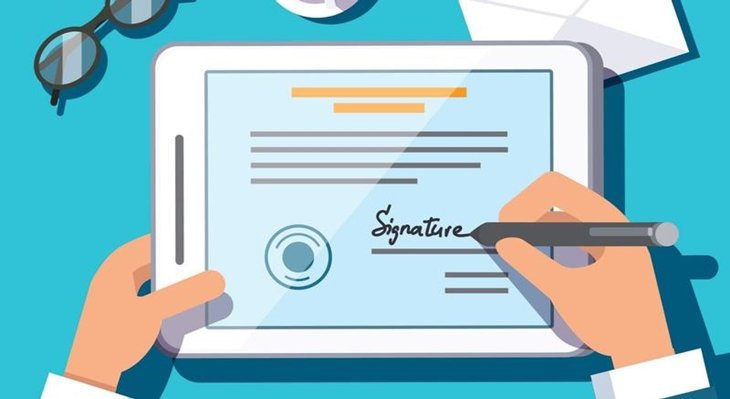
E-signature software enables legally binding digital signatures on any document — from client contracts and employment agreements to vendor onboarding forms and property leases.
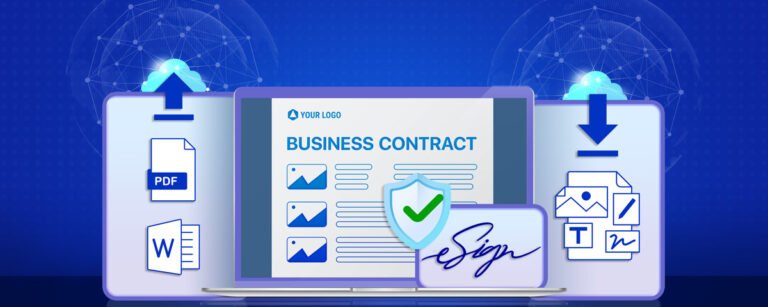
E-signature software is a digital tool that enables users to sign documents electronically, replacing physical ink signatures. It facilitates secure, legally binding agreements while automating the administrative work around document management — storage, tracking, reminders, version control, and audit trails.
Modern e-signature platforms go significantly beyond simply placing a digital mark on a PDF. They manage the entire document lifecycle: creating templates for frequently used agreements, routing documents to the right signatories in the right order, sending automated reminders when documents have not been signed, storing completed agreements securely, and generating full audit trails that show exactly who signed what, when, and from which device.
E-signatures are legally valid in most countries. In the USA, the Electronic Signatures in Global and National Commerce Act (ESIGN) and the Uniform Electronic Transactions Act (UETA) give e-signatures the same legal standing as handwritten signatures.
In the EU, the eIDAS regulation governs their validity. For most business documents (contracts, NDAs, employment agreements, purchase orders, consent forms) a properly executed e-signature is as legally binding as a wet ink signature.
The 8 Key Advantages of Adopting E-signature Software
⚡ Dramatically Faster Document Turnaround
The single most immediate benefit of e-signature software is speed. The traditional document signing process (print, sign, scan, email back, wait for the other party to do the same) routinely takes three to seven business days for a simple contract.
That timeline extends even further when multiple parties need to sign in sequence, or when one signer is travelling or in a different time zone.
With e-signature software, a contract sent at 2pm is often signed and returned before 5pm the same day. Recipients receive an email, tap a link, review the document on their smartphone, draw or type their signature, and submit — the entire process takes under five minutes.
For businesses closing sales, onboarding clients, or hiring staff, the difference between a two-hour turnaround and a five-day wait directly affects revenue velocity and competitive position.
💰 Significant Cost Reduction
The cost of paper-based document signing is consistently underestimated because most of it is invisible — distributed across small amounts of time, paper, printer ink, postage, and filing storage that never appear as a single line item. Aggregated across a year and all the documents a business handles, the cost is material.
E-signature software eliminates printing costs, postal and courier costs, physical storage costs for paper archives, and the labour cost of manual document handling — filing, retrieving, tracking which version is current, and chasing signatories.
For businesses that rely on contracts (agencies, consultancies, real estate firms, financial services providers, HR departments) the cost reduction from a year of e-signature adoption is typically multiple times the annual software subscription cost.
🔒 Enhanced Security and Compliance
Physical documents have inherent security weaknesses — they can be lost, damaged, altered, or accessed by unauthorised parties without any record of what happened. E-signature platforms address each of these vulnerabilities directly.
Reputable e-signature platforms use AES 256-bit encryption for document storage and transmission — the same standard used by financial institutions and government agencies.
Every signing event is recorded in a tamper-evident audit trail: who signed, when, from which IP address, from which device, and what the document contained at the moment of signing. If a document is altered after signing, the audit trail records this immediately.
This level of evidential quality is significantly stronger than a wet ink signature on a paper document that could, in principle, be altered or disputed without comparable forensic evidence.
Compliance coverage is equally comprehensive. Leading platforms are compliant with ESIGN (USA), eIDAS (EU), UETA (USA), GDPR (EU), HIPAA (healthcare), and SOC 2 Type II — covering the regulatory requirements of most industries operating in major markets.
😊 Better Customer Experience
Every friction point in a business relationship is a risk of losing that relationship. Asking a client to print a contract, sign it, and scan it back is friction. Asking them to physically attend an office to sign paperwork is friction. Asking an international client to courier documents is significant friction. These moments test the client's patience and signal that the business operates on outdated processes.
E-signature software removes all of this friction. Clients receive a signing link by email, review the document on any device, sign with a finger or typed name, and return the completed document in under five minutes — from their phone, from wherever they are in the world, at 11pm if that is when it suits them. The experience is professional, fast, and modern. It signals that your business values their time.
Branded signing pages — available in most paid e-signature plans — reinforce your company identity throughout the process, replacing the generic "please sign this" email with a professional, on-brand experience that builds confidence rather than creating uncertainty.
🌍 Anywhere, Anytime — True Remote Business Operations
The rise of remote work and international business has made location-dependent document processes a genuine operational bottleneck.
If a contract requires a physical signature from someone who is travelling, working remotely in another country, or simply unavailable at their office, the entire deal or project is delayed until they return.
E-signature software removes the geographic and time constraints entirely. Every party signs on their device, from wherever they are, on their schedule.
For businesses serving international clients (particularly for African entrepreneurs building US or UK client bases) this capability is not a convenience, it is a fundamental operational requirement.
A Nigerian agency serving US corporate clients cannot afford to be held up by signing logistics that assume everyone is in the same city.
🤝 Streamlined Collaboration and Workflow Automation
Many business documents require multiple signatories in a specific order — a contract might need a client to sign first, then a legal approver internally, then a finance signatory before it is fully executed.
Managing this sequence manually means tracking who has signed, chasing those who have not, and manually forwarding the document to the next person in the chain.
E-signature platforms automate this entirely. You configure the signing order once, and the platform handles routing — sending the document to each party in sequence, sending reminder emails automatically when deadlines approach, and notifying all parties when the final signature completes the document.
Integration with CRM and project management tools (Salesforce, HubSpot, Pipedrive, Google Workspace, Microsoft 365) means completed signed documents are automatically logged against the relevant client record without manual data entry.
🌱 Environmental Responsibility
Paper consumption from document signing is significant at scale. Contracts, NDAs, employment agreements, supplier agreements, consent forms — each one printed, potentially multiple times as revisions are made, and then physically stored. Over a year, the paper consumption, printing energy, and physical storage footprint of document management in a growing business adds up.
E-signature software eliminates this entirely. Documents exist only as digital files. Signatures are applied digitally. Storage is cloud-based. There is no physical material consumption at any stage of the process.
For businesses building sustainability commitments or wanting to reduce their environmental footprint, moving document signing to a digital platform is one of the simplest and most impactful changes available.
📈 Competitive Advantage and Professional Image
How a business handles its processes signals something to clients and partners about how it operates overall. A business that sends a professional signing link through a modern e-signature platform (branded, mobile-friendly, with clear instructions) conveys operational sophistication. A business that emails a PDF and asks the client to "print, sign, scan, and email back" signals the opposite.
In competitive markets where clients have multiple options, the operational experience a business provides at every touchpoint (including contract signing) contributes to their overall assessment of the vendor.
For small businesses competing against larger, more established players, using professional tools at every customer interaction narrows the perceived gap. For startups and growing agencies, it projects the image of an established, capable operation from the very first engagement.
Industry-Specific Use Cases
Digital Agencies and Consultancies
Client onboarding agreements, project contracts, scope of work documents, and monthly retainer agreements are all high-frequency document types for agencies. E-signature software enables same-day contract closure, reducing the time between proposal acceptance and project start. Agencies using template-based workflows can send a complete onboarding package — contract, NDA, brief template — in minutes rather than assembling it manually each time.
Real Estate
Property transactions involve extensive documentation — purchase agreements, lease contracts, disclosure forms, addendums, and financing documents. Each requires multiple signatures from buyers, sellers, agents, and lenders. E-signature platforms reduce the signing timeline from weeks to days, keep all parties updated on document status in real time, and maintain a comprehensive audit trail that meets regulatory requirements for real estate transactions.
Human Resources
Employment contracts, offer letters, policy acknowledgements, performance review sign-offs, and offboarding documents all require employee signatures. For HR teams managing hiring at scale or onboarding remote employees, e-signature software eliminates the logistics of coordinating physical document signing — particularly important when new hires are in different cities or countries from the HR team.
Healthcare
Patient consent forms, HIPAA authorisations, treatment agreements, and referral documents require secure, auditable signatures. HIPAA-compliant e-signature platforms provide the required security standards for healthcare data while reducing administrative burden — patients sign digitally before appointments, forms are stored securely in compliance with retention requirements, and the risk of illegible or incomplete handwritten forms is eliminated.
Legal and Financial Services
Client engagement letters, retainer agreements, financial planning documents, loan agreements, and disclosure forms all require documented, auditable signatures. E-signature software provides the tamper-evident audit trails and compliance certifications that legal and financial services firms need to demonstrate proper consent and authorisation in regulatory or legal proceedings.
E-commerce and Retail
Supplier agreements, vendor contracts, influencer collaboration terms, and wholesale agreements all benefit from faster turnaround through e-signatures. For e-commerce businesses with seasonal spikes — onboarding new suppliers quickly before peak trading periods — e-signature software removes the logistical delays that slow down vendor partnerships during time-critical business cycles.
What to Look for When Choosing E-signature Software
Not all e-signature platforms offer the same level of security, compliance, or feature depth. Before selecting a tool for your business, evaluate these criteria:
- Legal compliance coverage — confirm the platform meets the standards relevant to your industry and operating jurisdictions (ESIGN, UETA, eIDAS, GDPR, HIPAA)
- Audit trail quality — a comprehensive, tamper-evident audit log showing every action taken on a document is essential for legal enforceability
- Mobile experience — signing should work flawlessly on any smartphone without requiring an app download; this directly affects signer completion rates
- Template functionality — businesses that repeatedly send the same document types need template creation to avoid rebuilding documents from scratch each time
- Multi-party and sequential signing — if your documents require multiple signatories in a specific order, confirm the platform supports configured signing workflows with automated routing
- CRM and tool integrations — connection with your existing tools (Google Workspace, Microsoft 365, Salesforce, HubSpot, Slack) reduces manual data entry and keeps records in sync
- Storage and security standards — documents should be stored with AES 256-bit encryption, with SOC 2 Type II certification as the baseline security standard
- Branding options — branded signing pages and email notifications create a professional, on-brand client experience
- Pricing and volume limits — check how many documents and signers are included in each pricing tier; some platforms impose tight monthly limits that quickly become a barrier
airSlate SignNow is a strong choice for small businesses and entrepreneurs — it provides legally binding e-signatures, audit trails, templates, multi-party workflows, mobile signing, and integrations with major business tools at competitive pricing. Read the full airSlate SignNow review for a detailed breakdown of features, pricing, and use case fit.
Ready to Adopt E-signature Software for Your Business?
Faster contracts, lower costs, better client experience, and full legal compliance — e-signature software is one of the highest-ROI operational upgrades available to small businesses and agencies.
FAQs About E-signature Software
Yes — in most countries, e-signatures carry the same legal weight as handwritten signatures when they meet the relevant legal standard. In the United States, the ESIGN Act and UETA give electronic signatures full legal validity for most business documents. In the European Union, eIDAS governs e-signature legality with three tiers: Simple (SES), Advanced (AES), and Qualified (QES) — each with different validation requirements and use cases. In the UK, the Electronic Communications Act 2000 provides the legal basis. For the vast majority of business contracts, employment agreements, NDAs, and commercial documents, a well-executed e-signature on a compliant platform is fully legally enforceable. Exceptions exist for certain document types — wills, property deed transfers, and some court filings may still require wet ink signatures depending on jurisdiction.
A scanned signature is simply an image of a physical signature placed on a document — it has no inherent authentication or tamper-evidence. Anyone can copy a scanned signature image and place it on any document. An electronic signature from a properly designed e-signature platform is fundamentally different: it is cryptographically linked to the signed document using digital certificates and encryption. If the document is altered after signing, the signature is automatically invalidated. The platform records a complete audit trail — signer identity (verified by email access at minimum, and optionally by SMS authentication, ID verification, or biometrics), timestamp, IP address, device fingerprint, and document hash at the moment of signing. This combination of cryptographic integrity and audit trail evidence makes a properly executed e-signature significantly more legally defensible than a scanned paper signature.
No — with most e-signature platforms, recipients do not need to create an account or install any software to sign a document. They receive an email with a signing link, click the link, review the document in their browser, and apply their signature. The entire process works on any device — desktop, tablet, or smartphone — without any software download or account registration. This frictionless experience for the signer is one of the key reasons e-signature completion rates are significantly higher than traditional paper-based processes.
Yes — reputable e-signature platforms use security standards that meet or exceed those required for most regulated industries. The benchmarks to look for are AES 256-bit encryption for documents at rest and in transit, SOC 2 Type II certification (which requires an independent annual audit of security controls), and compliance certifications for relevant regulations (GDPR, HIPAA, eIDAS). Physical documents stored in a filing cabinet or emailed as unencrypted PDF attachments are typically significantly less secure than documents managed on a compliant e-signature platform.
Most business documents can be signed using e-signature software — including service agreements, client contracts, NDAs, employment contracts and offer letters, independent contractor agreements, purchase orders, supplier agreements, lease agreements (commercial property), consent forms, loan agreements, financial planning documents, and policy acknowledgements. Document types that typically still require physical signatures in most jurisdictions include wills and testamentary documents, some real estate deeds and title transfers, court documents, government forms in some countries, and certain notarised documents. If you are uncertain whether a specific document type is valid with an e-signature in your jurisdiction, consult a local legal professional.
airSlate SignNow is a strong choice for small businesses and entrepreneurs — it provides legally binding e-signatures, full audit trails, document templates, multi-party signing workflows, branded pages, mobile signing, and integrations with Google Workspace, Microsoft 365, Salesforce, and other tools at competitive pricing. For a complete feature-by-feature breakdown and pricing comparison, read our full airSlate SignNow review and our guide to choosing the best e-signature solution for your business.
Summary — Is E-signature Software Worth Adopting?
The question is not really whether e-signature software is worth adopting — the evidence across every industry says the operational, financial, and client experience benefits are clear and consistent. The question is whether the cost of the software is justified by the value it delivers for your specific business volume.
For any business handling more than a handful of contracts per month, the answer is almost universally yes. The time saved on document handling, the faster deal closures, the reduced printing and postage costs, and the stronger legal defensibility of digitally signed agreements collectively produce a return on investment that exceeds the platform cost within the first few months for most businesses.
For African entrepreneurs building agencies, consulting businesses, or digital businesses that serve international clients, e-signature software is particularly valuable — it removes the geographical friction from contract signing that makes cross-border business relationships cumbersome, and it projects the operational professionalism that North American and European clients expect from credible business partners.
Start Signing Documents Electronically Today
airSlate SignNow provides legally binding e-signatures, audit trails, templates, and multi-party workflows — trusted by businesses in over 40 countries.