📋 Table of Contents
Apollo.io — the all-in-one B2B sales intelligence and engagement platform used by over 500,000 businesses to find, qualify, and reach out to prospects across email, phone, and LinkedIn from a single interface.
The gap between having a great product and consistently filling your sales pipeline is where most B2B businesses struggle. Finding the right contacts, getting accurate contact information, reaching out at the right moment, and managing the entire outreach process across email, phone, and LinkedIn, done manually, this consumes enormous amounts of sales team time for inconsistent results.
Apollo.io was built to automate and scale this entire process. It combines a database of 275 million contacts and 73 million companies with AI-powered lead scoring, multichannel engagement sequences, deal management, and sales analytics in a single platform.
The result is a sales intelligence tool that replaces five or six separate tools (contact finder, email sequencer, CRM, analytics, and intent data provider) with one integrated system.
This review covers Apollo.io's features, pricing, pros and cons, and who gets the most value from it. For a deeper comparison with competing tools, see our best CRM software guide and our Amplemarket review.
What Is Apollo.io?
Apollo.io (apollo.io) is an all-in-one B2B sales intelligence and engagement platform. It serves as a contact database, sales prospecting tool, email sequencer, cold calling platform, CRM integration layer, and sales analytics suite — all in one interface. Over 500,000 businesses use Apollo.io for their sales operations, making it one of the most widely adopted sales intelligence platforms available.
The platform's core workflow runs in sequence: find your ideal prospects from the database using precise filters, enrich them with verified contact data and buying signals, add them to automated multichannel outreach sequences, track engagement, score leads by purchase-readiness, and manage deals through the pipeline — all without leaving Apollo.
Quick Verdict at a Glance
Apollo.io Pros and Cons
✓ What Apollo.io Does Well
- Over 275 million contacts — one of the largest B2B databases available
- Clean, intuitive dashboard — short learning curve for new users
- Advanced search filters enable highly targeted prospect list building
- Add leads directly to outreach sequences from the search interface — significant time-saver
- Automated multichannel sequences (email, phone, LinkedIn) run reliably without manual intervention
- AI-powered lead scoring prioritises the highest-intent prospects automatically
- Buying intent signals surface leads most likely to convert right now
- Continuous database refresh — contact data stays current over time
- Replaces multiple separate tools (contact finder, sequencer, CRM, analytics) in one platform
✗ Limitations Worth Knowing
- Free plan is too restricted for meaningful sales use — it is an evaluation tool, not a working plan
- Less effective for highly niche industries or markets with low online presence
- Requires regular monitoring and campaign refinement — set-and-forget produces mediocre results
- Some users report occasional minor bugs, though the core features are reliable
- Large database means some contact data will be outdated or unverified — data quality requires spot-checking
Apollo.io Features — Full Breakdown
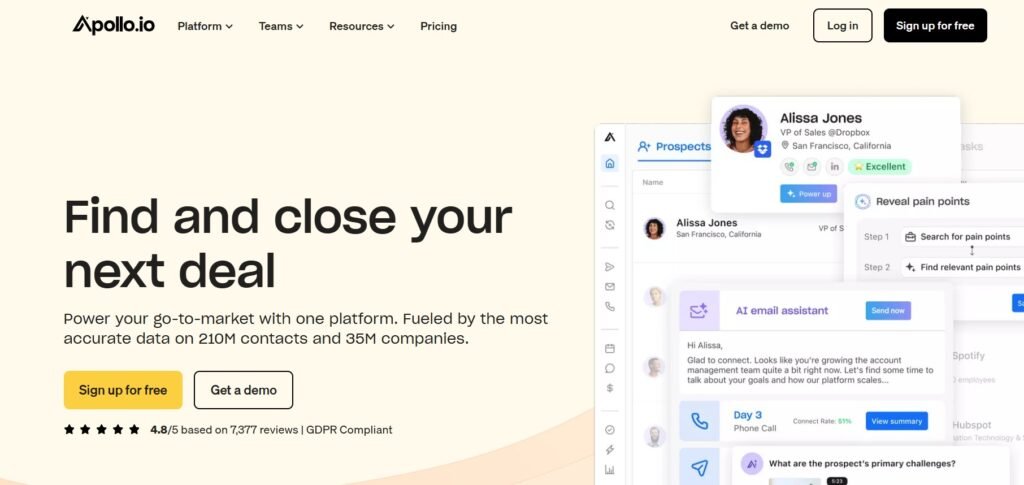
Apollo.io's core feature set covers every stage of the B2B sales process — from finding and qualifying prospects to engaging them across multiple channels and managing deals through the pipeline.
🗃️ Contact Database — 275M Contacts, 73M Companies
Apollo.io's database is the platform's most foundational feature. With 275 million prospect contacts and 73 million company profiles, it gives sales teams access to a scale of B2B contact data that would otherwise require expensive data providers.
The database goes beyond names and email addresses. Each contact profile includes job title, seniority level, department, company size, industry, revenue range, technology stack, growth signals, and buying intent data. Intent signals indicate where a company is in its buying journey — signals like "company expansion," "recent funding," "new hire in relevant role," or "opened multiple emails in the past week" help sales teams prioritise the contacts most likely to be in an active buying cycle right now, rather than treating all prospects equally.
The search interface offers over 65 filter types — enabling sales teams to build hyper-targeted prospect lists based on exact ICP (Ideal Customer Profile) criteria. Filtered lists can be pushed directly into outreach sequences with a single click, eliminating the export-import workflow that wastes time in most prospecting processes.
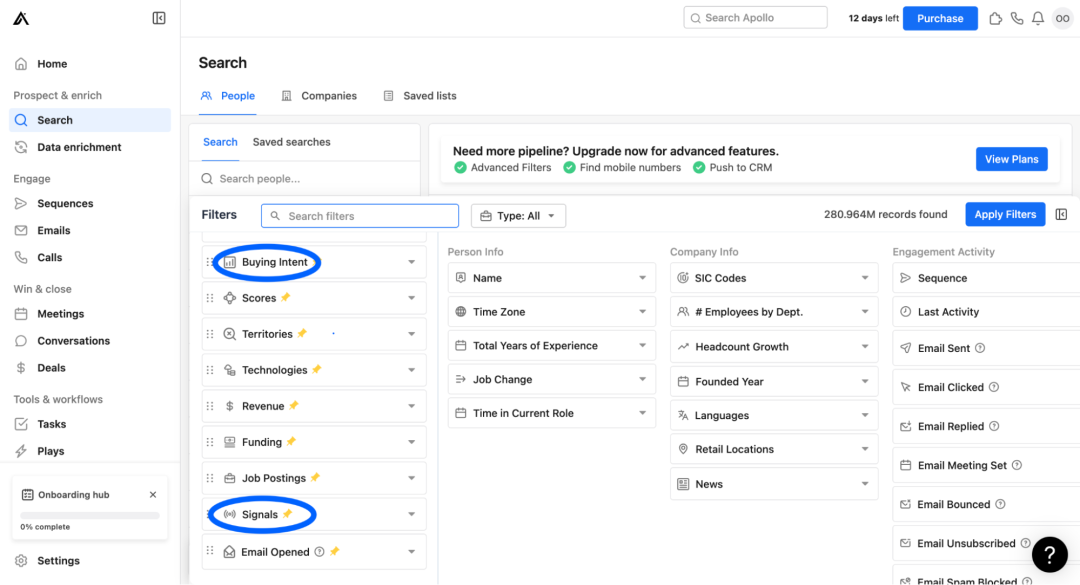
Apollo.io's contact database — 275 million B2B prospects searchable by over 65 filter types including job title, industry, company size, technology stack, and buying intent signals.
🎯 Lead Scoring and Qualification
Apollo.io's AI-powered lead scoring engine assigns a score to each prospect based on their demographic profile, behavioural signals, historical interactions, and likelihood to convert. The scoring is customisable — you define which behaviours and attributes score highest based on your specific sales goals.
Example scoring logic: a prospect who visits your pricing page three times might score 10 points; attending a webinar scores 2 points; starting a free trial scores 15 points. Apollo updates these scores in real time as new data is added to each contact profile, automatically surfacing the leads that have moved into a higher-intent state without requiring manual review of the full prospect list.
For sales teams managing thousands of prospects simultaneously, automated lead scoring is the difference between prioritising correctly and guessing.
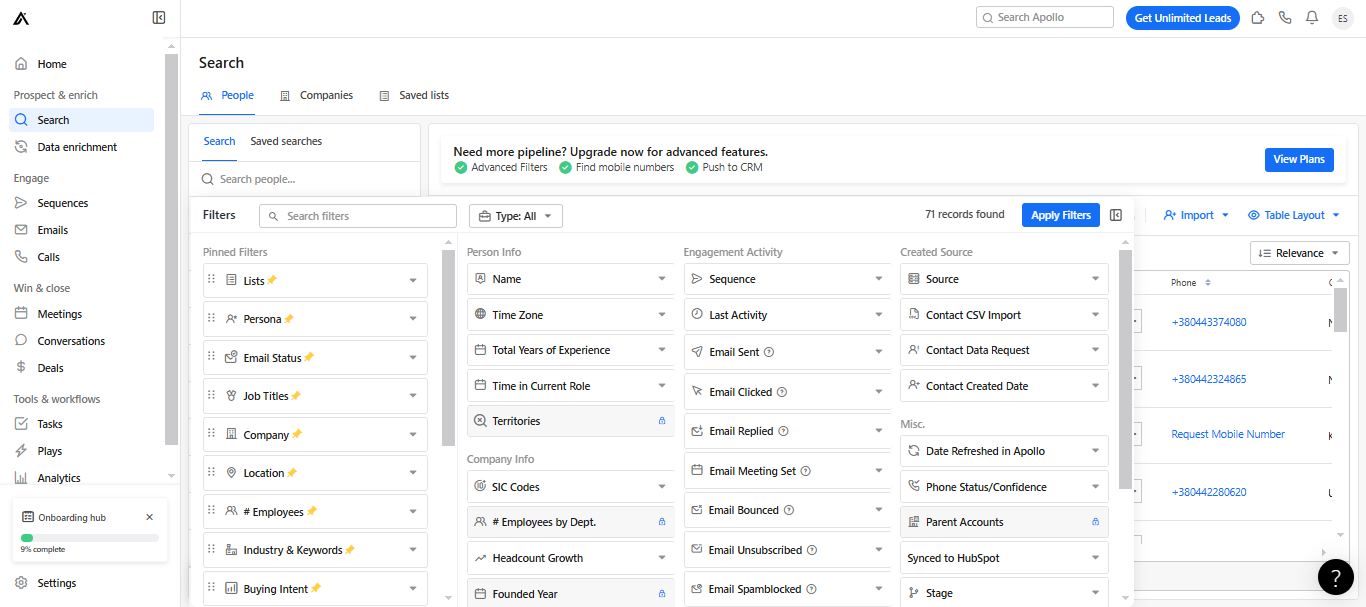
Apollo.io lead qualification — customisable scoring criteria assign points based on prospect behaviours and profile attributes, automatically prioritising the leads most likely to convert.
📥 Inbound Lead Generation
Beyond outbound prospecting, Apollo.io handles inbound lead capture and nurturing. Businesses can create customisable lead capture forms that feed directly into Apollo's AI-powered scoring and nurturing system.
When an inbound lead submits a form, Apollo automatically enriches the contact with additional data from its database, scores the lead, and routes them into the appropriate nurturing sequence based on their purchase-readiness — without any manual intervention.
The AI personalisation layer generates tailored initial messages for inbound leads based on their form data and company profile — making the first response feel specific and relevant rather than generic, which significantly improves conversion rates from inbound enquiries.
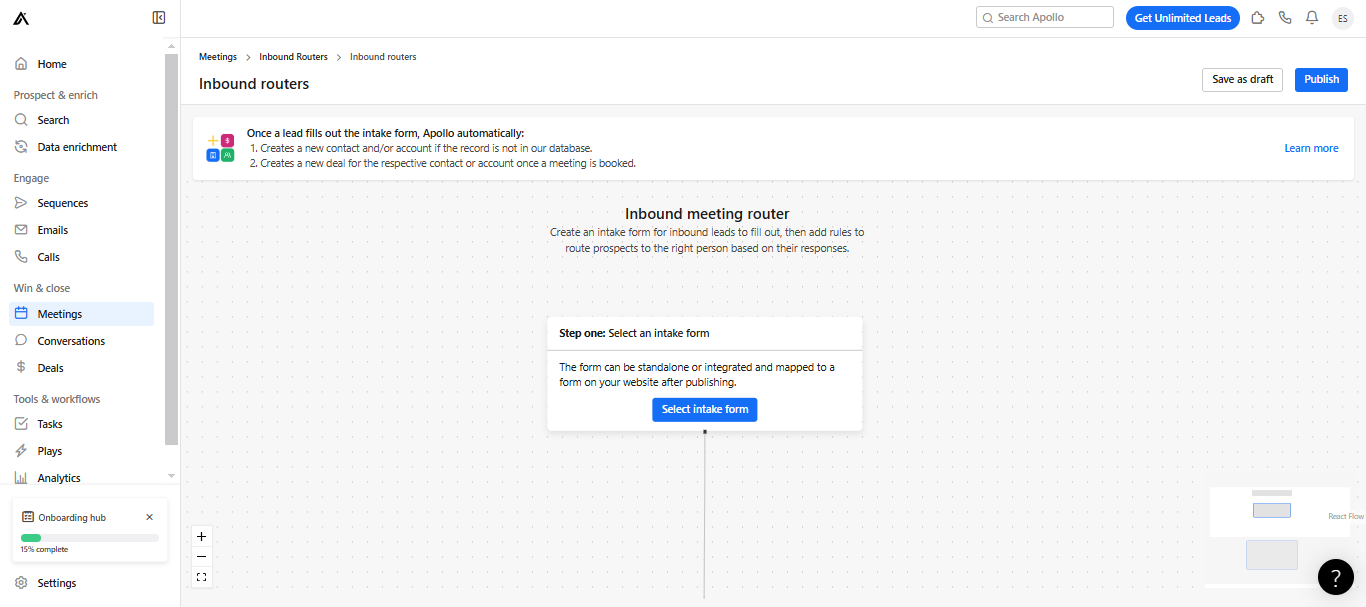
Apollo.io inbound lead capture — customisable forms feed directly into the AI scoring and nurturing system, with personalised follow-up messages generated automatically based on prospect data.
📨 Sales Engagement — Multichannel Outreach Sequences
Apollo.io's sales engagement module automates outreach across email, phone, and LinkedIn simultaneously. Rather than managing separate tools for each channel, sales teams build sequences in Apollo that orchestrate the full outreach flow (an email on day 1, a LinkedIn connection request on day 3, a phone call on day 5, a follow-up email on day 7) all executing automatically based on the schedule and triggers you configure.
The AI assistant accelerates sequence setup significantly. Before generating your sequence and messaging, Apollo's AI asks you to provide key information about your product, value proposition, and desired call-to-action.
It then generates complete sequence content (subject lines, email bodies, LinkedIn messages, and call scripts) tailored to your specific product and target audience.
The generated content typically requires editing and refinement, but the baseline quality is high enough that it dramatically reduces the time required to launch a new campaign.
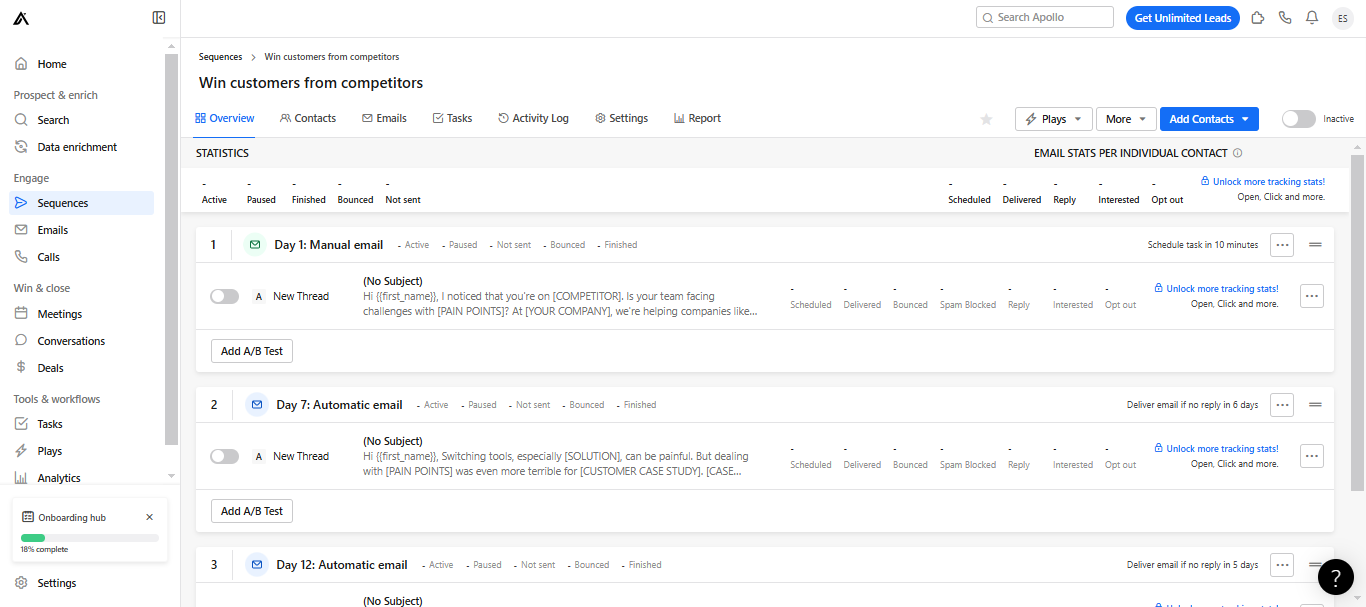
Apollo.io multichannel sequences — orchestrate email, LinkedIn, and phone outreach in a single automated sequence that runs across all channels based on your configured timing and triggers.
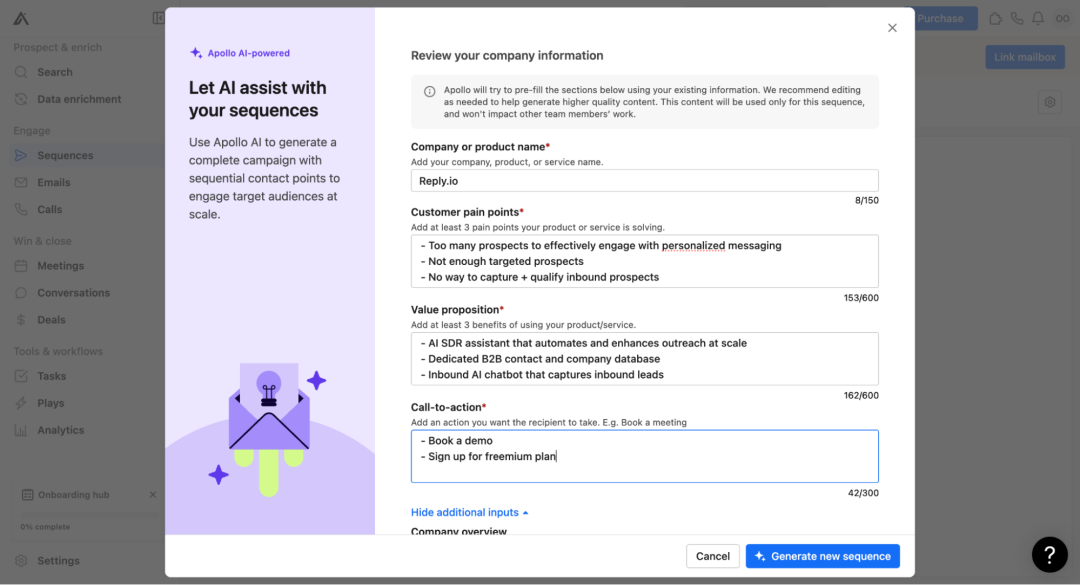
Apollo.io's AI assistant — generates complete sequence content (emails, LinkedIn messages, call scripts) based on your product, value proposition, and target audience. Edit and refine before launching.
💼 Deal Management
Apollo.io's deal management dashboard provides a real-time view of every active deal in your pipeline — which accounts are generating the most revenue, which are approaching renewal or cancellation, which represent upsell or cross-sell opportunities, and where each deal sits in the sales cycle.
This visibility allows sales managers to identify at-risk accounts before they churn and identify high-value accounts that warrant additional attention before a decision is made.
The deal view connects directly to the contact and account data in Apollo's database — so when you are reviewing a deal, you have the full context of the account's profile, recent activity, and engagement history in the same interface without switching to a separate CRM.
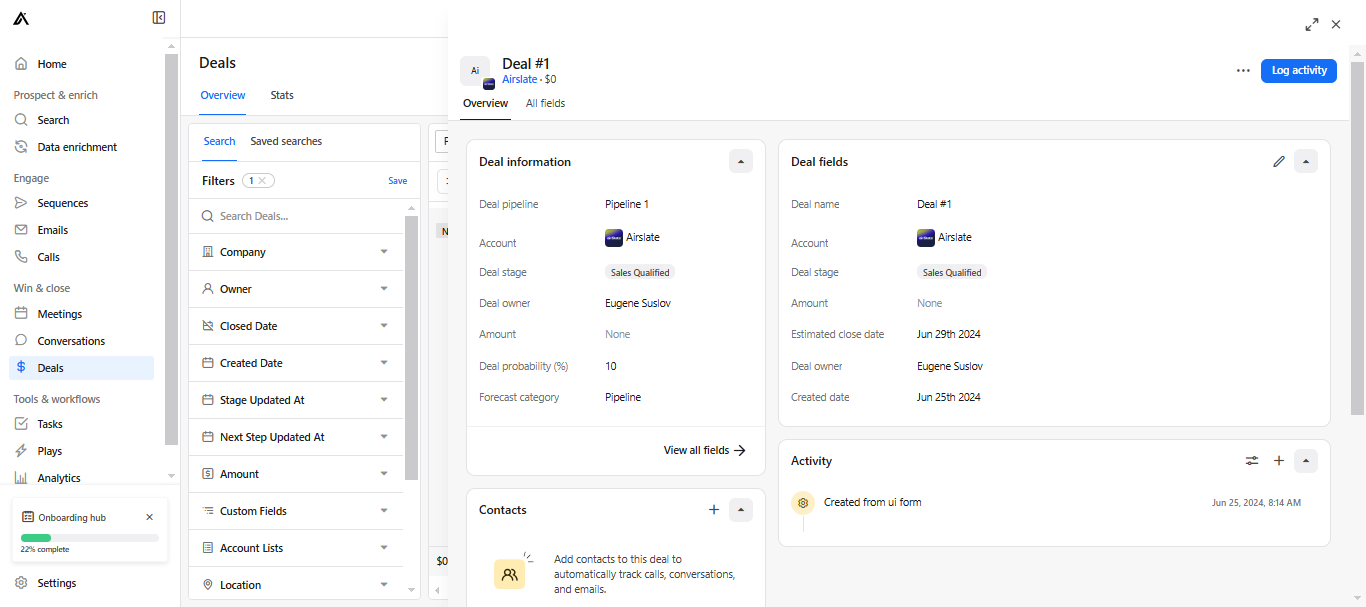
Apollo.io deal management — real-time pipeline view showing deal status, revenue by account, upsell opportunities, and renewal timelines across all active deals.
Apollo.io Pricing Plans
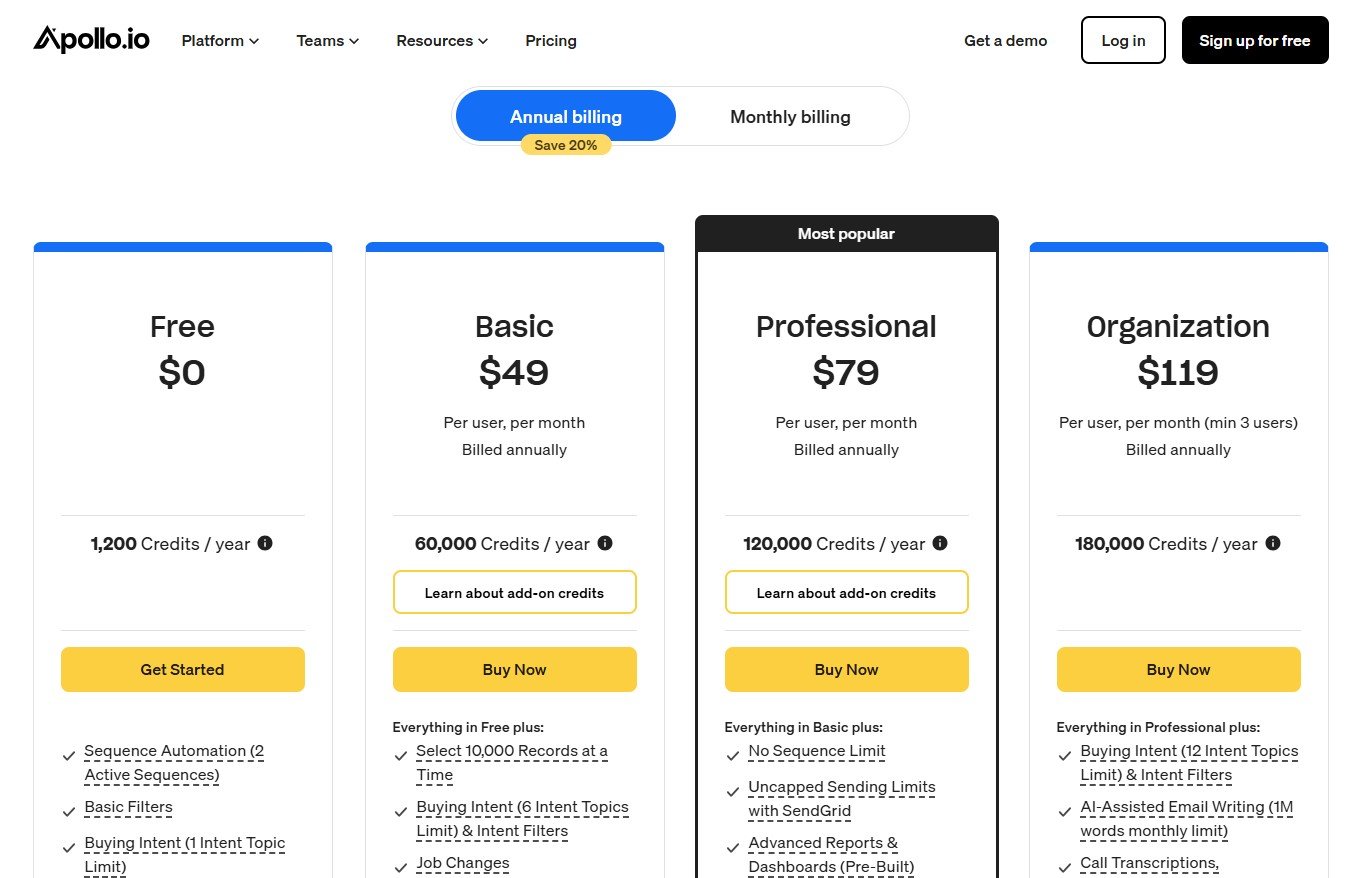
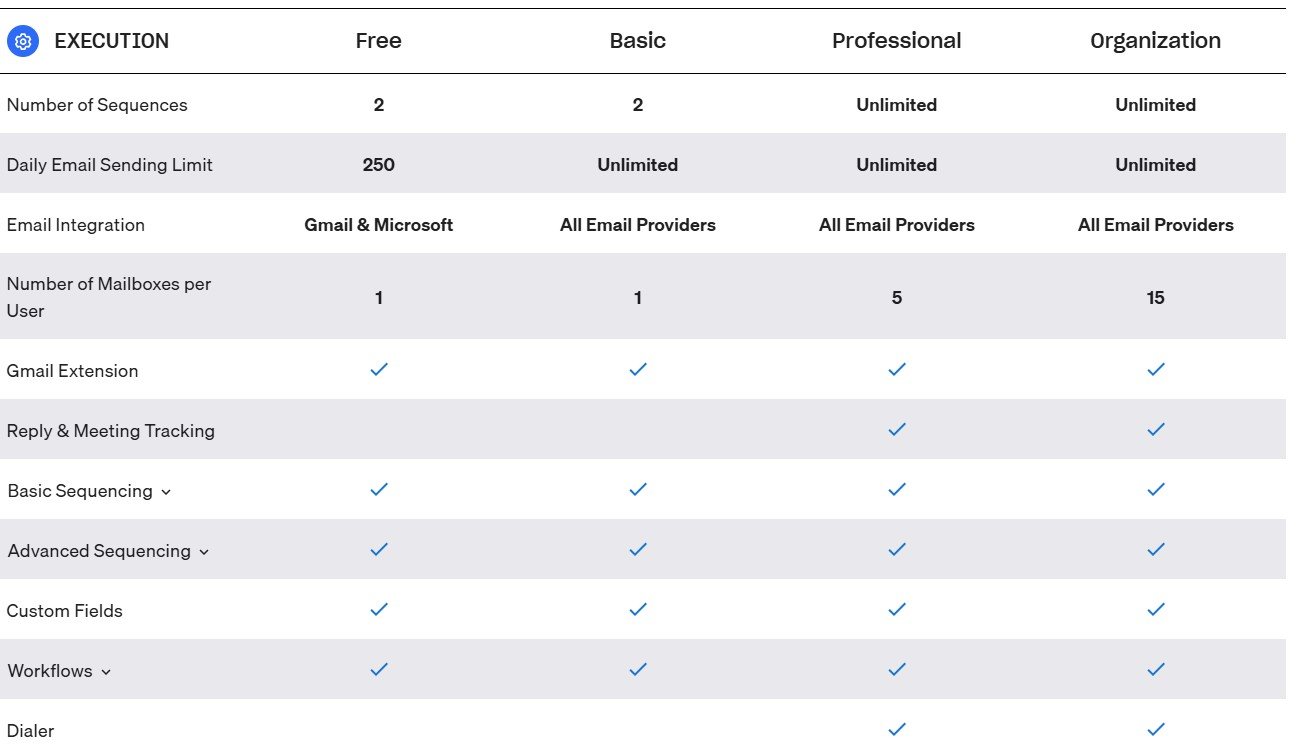
Apollo.io pricing — four tiers from the free plan to enterprise, scaling in contact export credits, calling minutes, and advanced feature access.
- Basic contact database access
- Limited email credits per month
- Basic sequence functionality
- LinkedIn extension
- High-volume email sequences
- Sufficient export credits for campaigns
- Unlimited email credits
- 25 mobile (calling) credits/month
- Basic AI features
- All Basic features
- Advanced sequences and automation
- Higher calling credit limits
- Advanced AI personalisation
- CRM integrations (Salesforce, HubSpot)
- Advanced analytics and reporting
- All Professional features
- Bulk export for large-scale campaigns
- Advanced permission controls
- Custom fields and workflows
- Dedicated customer success manager
- Advanced security features
The Basic plan is best for solo founders and small teams doing high-volume email outreach. The Professional plan is the right choice for sales teams that need CRM integration, advanced AI personalisation, and higher calling credit limits. The Organization plan suits enterprise-scale teams with 5+ sales reps running large lead-generation campaigns. Pricing shown reflects annual billing rates — monthly billing is available at higher rates. Always verify current pricing at apollo.io.
Why Apollo.io Works for Small Businesses
- Eliminates the need for multiple separate tools. A standalone contact finder, email sequencer, CRM, and intent data provider together can cost $300–$600 per month. Apollo replaces all of them at a fraction of the combined cost — a meaningful saving for businesses operating with lean budgets.
- Automation does the work of multiple SDRs. For small teams or solo founders who cannot afford a full sales development team, Apollo's automated sequences execute the follow-up cadence that would otherwise require a dedicated person monitoring each outreach campaign daily.
- Intent data surfaces the right moment to reach out. Reaching a prospect when they are actively researching a solution (indicated by buying intent signals) produces dramatically better results than cold outreach at a random time. This intelligence was previously only available to enterprises — Apollo makes it accessible at the small business pricing tier.
- Integrations reduce friction. Apollo connects natively with Salesforce, HubSpot, Pipedrive, Gmail, Outlook, and Zapier — fitting into existing sales workflows rather than requiring teams to change how they work.
Apollo.io Alternatives
Woodpecker
Woodpecker focuses specifically on cold email outreach and deliverability optimisation. Its email verification before outreach reduces bounce rates, and its warm-up tools help maintain healthy sender reputation.
Starting at $30/month, it is significantly more affordable than Apollo's paid tiers. Best for businesses whose primary outreach channel is email and who want granular deliverability controls. Less suitable than Apollo for teams that need a built-in contact database or intent data.
Visit Woodpecker →Uptics
Uptics combines multichannel outreach sequences with a built-in sales CRM, making it a strong option for teams that want prospect management and outreach in one place without Apollo's price point.
The tool includes a shared inbox, email follow-up automation, and API connectivity. Priced at $99/month for one plan, with no free trial available. Best suited for small sales teams wanting integrated CRM and outreach without the database depth Apollo provides.
Visit Uptics →Yesware
Yesware is a sales engagement platform that works directly inside Gmail and Outlook via browser extension — keeping the email experience familiar while adding email tracking, sequence automation, multi-channel campaigns, and detailed analytics.
Best for sales reps who want to work entirely within their existing email client. The reporting is less advanced than Apollo's, and the feature set on paid plans is more limited, but the Gmail/Outlook-native experience is a strong fit for teams resistant to learning a new interface.
Visit Yesware →Smartlead
Smartlead is a strong option for cold email campaigns combined with multi-channel social outreach. It includes email inbox warm-up tools, a shared team inbox, automated follow-up sequences, and a capable API for website integration.
A free trial is available and the cheapest plan starts at $39/month. Best for outbound-focused teams where email deliverability is the primary concern and database access is less important.
Visit Smartlead →Amplemarket
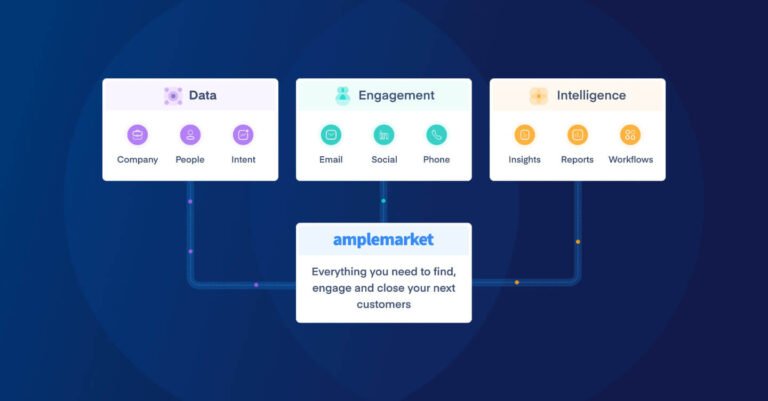
Amplemarket is a premium sales engagement platform targeting enterprise and scaling sales teams. It provides sales intelligence, lead generation, multichannel outreach, deliverability optimisation, and CRM integration — competing with Apollo at the high end of the market. Pricing is not publicly listed and typically suits larger teams with higher budgets. For a detailed comparison, see our Amplemarket review.
Visit Amplemarket →Start with Apollo.io Today
Free plan available — no credit card required. Access the 275M contact database and test multichannel outreach sequences before upgrading to a paid tier.
Frequently Asked Questions About Apollo Software
Apollo.io is primarily used for B2B sales prospecting, outreach automation, and lead generation. Sales teams use it to find potential customers from the 275 million contact database using precise filters (job title, company size, industry, technology stack, etc.), enrich those contacts with verified email addresses and phone numbers, and then engage them automatically through multichannel outreach sequences covering email, LinkedIn, and phone. It also handles lead scoring, deal tracking, and sales analytics — making it one of the most comprehensive end-to-end sales intelligence platforms available at this price point.
Yes — Apollo.io is particularly well-suited to small businesses and growing startups that need enterprise-scale sales prospecting without the enterprise-scale budget. The Basic plan at $49/month per user provides access to the full contact database, email sequences, and AI features that would otherwise require purchasing multiple separate tools. The automation capabilities allow small teams or even solo founders to execute outreach campaigns at a scale that would require several dedicated sales reps doing the same work manually. The main consideration is that meaningful value from Apollo requires a commitment to monitoring, refining, and optimising campaigns — it automates the execution but not the strategic decision-making.
Apollo.io's database is continuously refreshed, and the platform claims high data accuracy on verified contacts. That said, with 275 million records, it is unrealistic to expect 100% of contact data to be current and accurate at any given time — some contacts will have changed roles, companies, or email addresses since their data was last updated. Apollo's intent signals and engagement data can help identify the most recently active and therefore likely more current contacts. Best practice is to use Apollo's email verification features before large-scale outreach campaigns to identify and remove invalid addresses, protecting your sender reputation and improving deliverability metrics.
The primary differences between Basic ($49/month annual) and Professional ($79/month annual) are CRM integration depth, calling credit limits, and advanced AI personalisation. Basic includes sufficient credits for solid email outreach campaigns but only 25 mobile (calling) credits per month — enough to test phone outreach but not to run it as a primary channel. Professional includes higher calling credits, native integration with Salesforce and HubSpot (beyond the basic connectors), advanced AI personalisation for sequence content generation, and more detailed analytics and reporting. For teams whose outreach strategy includes significant phone outreach or who need CRM data to sync reliably, Professional is the correct tier.
Apollo.io has some CRM functionality — deal management, contact records, activity tracking, and pipeline visibility — but it is not a full CRM replacement for most businesses. Its strengths are in the outbound sales intelligence and engagement workflow, not in the post-sale relationship management, customer service, and account management functions that dedicated CRMs like Salesforce, HubSpot, or Pipedrive handle. Most teams use Apollo alongside a primary CRM rather than instead of one. Apollo's Professional and Organisation plans include native CRM integrations that sync prospect data, engagement history, and deal records bidirectionally — keeping both systems current.
Buying intent signals are behavioural data points that indicate a company or contact is actively researching or considering a purchase — suggesting they are in an active buying cycle rather than casually aware of your category. Apollo.io collects and analyses signals such as recent job postings in relevant roles (suggesting a company is scaling in an area where your product is relevant), technology changes (installing or uninstalling competitor tools), company expansion events, recent funding announcements, content engagement (a contact engaging repeatedly with material in your category), and on-site behaviour. These signals help sales teams prioritise outreach to the contacts most likely to be receptive right now rather than treating all prospects in the database equally.
Final Verdict — Who Is Apollo.io For?
Apollo.io is the right tool for B2B sales teams that need to scale their outbound prospecting without proportionally scaling their headcount.
The combination of a 275 million contact database, AI-powered intent signals, multichannel outreach automation, and deal management in one platform provides a capability level that was previously only accessible to enterprise sales operations with multiple specialised tools and the budget to match.
At $49–$79 per user per month (annual billing), Apollo.io is accessible to solo founders, startups, and small sales teams — making it the right fit for companies that are serious about outbound sales but not yet large enough to justify enterprise-tier pricing. The free plan provides enough access to evaluate the interface and test a small outreach campaign before committing to a paid tier.
The honest caveat: Apollo is a powerful tool that produces results proportional to the attention you invest in it. Teams that build precise ICP filters, monitor campaign performance, and iterate on messaging will see strong results.
Teams that treat it as a fully automated system they never revisit will see mediocre returns. The platform does the heavy lifting of execution — but the strategy still requires human input.
Try Apollo.io Free Today
Access the 275M B2B contact database, build your first prospect list, and launch a multichannel outreach sequence — all on the free plan, no credit card required.